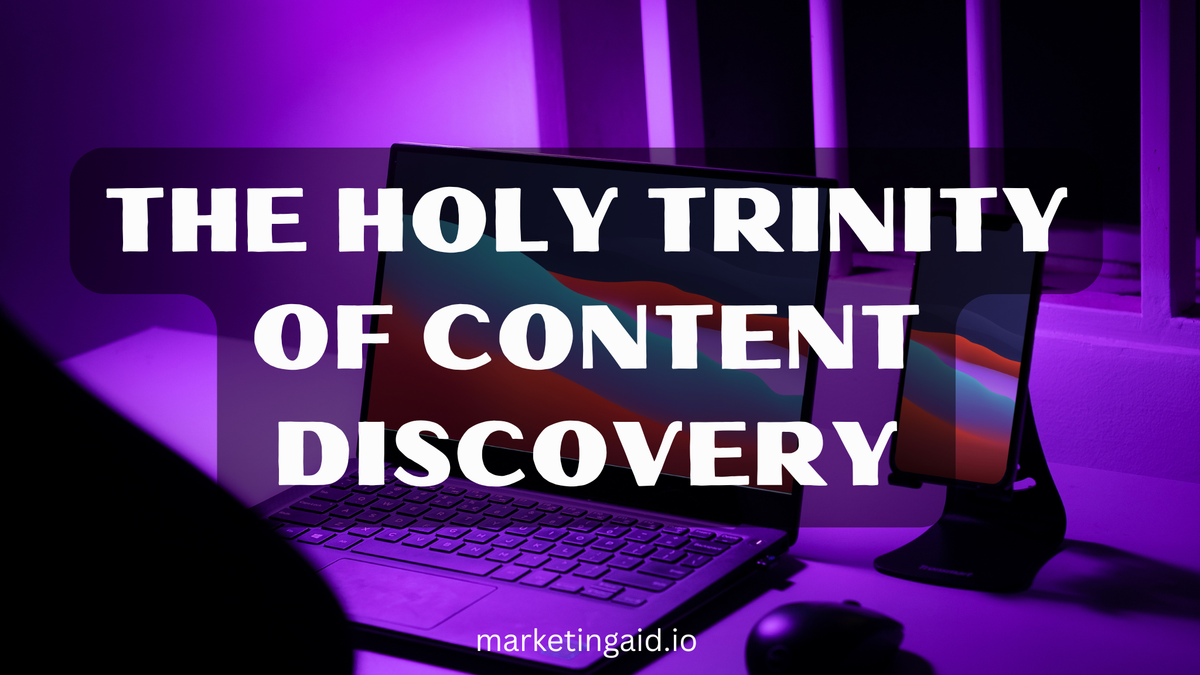
Owned, Earned & Paid. The holy trinity to visibility

You know that moment?
The one where you pour your soul into a blog post, hit publish, and wait for the applause…
And what you get is crickets.
Not even a pity like from your cousin who sells leggings on Facebook.
That’s when the existential dread hits:
“Was it me? Was it the algorithm? Is my content trash? Am I trash?”
Let me stop you right there.
Your content might be brilliant. But if no one sees it, it doesn’t matter.
(Sorry. I don’t make the rules. The attention economy does.)
Which brings us to the thing that most creators, coaches, and brands ignore until it’s too late:
👉 Distribution.
So let’s talk about how to do it like a pro using the holy trinity of visibility: Owned, Earned, and Paid.
Step 1: OWNED – Your House, Your Rules
These are the channels you control. No algorithm, no gatekeepers, no begging for reach.
- Your email list (please tell me you have one)
- Your website/blog
- Your own social profiles
- Podcasts
- Communities you run
Owned media is your safety net. It's the difference between “Instagram deleted my account” and “I still have 5,000 humans who’ll read my next thing.”
Step 2: EARNED – Let Other People Scream Your Name
This is the attention you don’t pay for — but you do earn it by not being boring.
- Shares
- Mentions
- Collabs
- PR
- Podcast guesting
- “I saw your post and had to send it to my friend” energy
Earned media is what happens when your content slaps hard enough that someone else wants to slap people with it too.
Step 3: PAID – Put Some Money Behind That Megaphone
Boost it. Promote it. Run the all the ads.
Because sometimes, if you want new eyeballs, you have to pay the eyeball tax.
- Facebook + Instagram ads
- YouTube pre-roll
- Sponsored posts or placements
- Influencer collabs with actual ROI (not just a girl holding your thing and smiling into the void)
Okay, but why does distribution actually matter?
Publishing alone doesn’t move the needle. Your blog, your newsletter, your feed, etc, is all rented attention or repeat audiences. Without a system to move content beyond what you already control and out of limited echo chambers, reach stays small. Growth stays stuck.
Distribution takes one good piece and gives it range. You stop creating from scratch and start compounding what you’ve already built. You stop relying on “more” and start squeezing everything you can from what’s working.
Reach is just one part. Relevance is the other. Distribution puts content where people are already paying attention, and gets there when they’re ready to do something about it.
It extends shelf life. Builds brand memory. Makes trust scalable. One person sees the same message five different ways and starts to believe you know what the hell you’re talking about. That’s how authority gets built, and repetition is how loyalty and trust happen.
And because it shows up across platforms, distribution gives you real data. You know what to amplify, what to cut, what to double down on. That feedback loop is everything.
The goal isn’t volume. It’s velocity. The kind that builds as you go and creates something scalable.
Why Content Distribution Matters for SEO
Content that stays in one place stays invisible.
Search engines need signals. Links, mentions, engagement, velocity. None of that shows up when your content doesn’t move. Distribution gives it the chance to circulate, earn attention, and stack value over time.
Backlinks are acquired with more reach. A blog post republished through guest features, shared on the right platforms, and referenced in context is ten times more likely to attract editorial links, and that’s still one of the strongest signals Google pays attention to.
AI search adds another layer. Features like like AI Overviews and ChatGPT aren’t pulling only from your site. They pull from what’s already being linked to, cited, and talked about across the web. Distribution makes sure your content gets into that broader network, where it can be picked up and referenced by more than just your own traffic.
Brand visibility increases when your content shows up consistently across multiple platforms. That visibility drives branded search, long-tail reach, and recognition that positions your content as relevant, without needing to stuff keywords or chase search volume.
SEO gains start stacking when distribution is layered. Owned content supports earned placements. Paid amplification creates a lift. Social buzz kicks off link chains. Everything feeds into everything else.
And none of it happens without a system to push your content further than the first click.
How to Match Your Distribution Channels to Your Audience
A successful content distribution strategy begins with knowing who you want to reach and where they spend their time. Without this foundation, even the most creative assets can end up lost in the wrong places.
1. Start with Audience Research
- Map out your ideal readers, customers, or clients: demographics, professional roles, interests, and online habits.
- Use tools like Google Analytics, audience surveys, or social insights to discover which platforms deliver the highest engagement.
2. Match Channels to Goals and Behaviors
- If your goal is B2B leads, prioritize LinkedIn, industry podcasts, and trade newsletters.
- For consumer or creative communities, Instagram, TikTok, and YouTube often outperform.
- Forums, Reddit, Discord, or niche groups work well for technical, product-led, or fan-driven content.
3. Score and Prioritize Platforms
- Make a simple table for each channel, rating it on audience alignment, past ROI, content fit, and competitive noise:
| Channel | Audience Match | Past ROI | Content Fit | Competition | Priority |
|---|---|---|---|---|---|
| High | High | Guides, B2B | High | Yes | |
| Medium | Medium | Visuals | High | Maybe | |
| Twitter/X | High | High | Threads, Industry News | High | Yes |
| Podcasts | High | Medium | Interviews, Insights | Low | Yes |
| High | High | Threads, Q&A | Medium | Yes |
Replicate this process for each asset or campaign to ensure your distribution always targets the channels with true impact.
How to Measure and Optimize Your Content Distribution
If you want distribution that actually drives results, you need to measure what matters and act on it.
Start by tracking the basics. Reach shows you how far content travels. Impressions give you volume. Together, they tell you how wide your distribution actually goes—but high numbers don’t mean much without quality behind them.
Engagement is where things start to get useful. Shares, saves, comments all show human interaction and can help you tell what resonates and what doesn't.
Click-through rate cuts through the vanity metrics. If people aren’t clicking, the messaging missed. Fix the headlines, CTAs, everything that captures attention.
Referral traffic tells you where people are coming from. If you’re showing up on multiple platforms and only one of them sends visits to your site, guess where you double down.
Conversions are the end goal. Think about the end actions you want people to take - sign-ups, downloads, purchases, bookings, etc. If your content isn’t converting, it's not doing it's job and should be revised.
Backlinks and brand mentions track earned reach. If people are referencing you without being paid to do it, your distribution is doing real work.
Use the tools that give you clean, specific data.
Google Analytics for source tracking, behavior flow, and campaign performance.
- Native analytics for social, Threads, Twitter, LinkedIn, TikTok, Instagram.
- Email platforms like Kit, Mailchimp, or Klaviyo for open rates, click - rates, and list growth.
You need to know where is actually working so you don't dilute your efforts trying to be everywhere all at once.
Compare performance: A/B test relentlessly. Try different formats, hooks, headlines, send times. Keep the winners. Cut the rest.
Treat your distribution like an experiment, because that’s what it is.
Every channel, every asset, every CTA is data.
Track it. Use it. Iterate.
The marketers who move fast, test everything, and optimize on the fly are the ones getting the results.
The ones still measuring success in “likes” are just making content for fun.
Putting this to Work
Remember the sounds of those crickets I mentioned earlier? You did all the work of creating the post, but nobody is going to read it if they don't even know it exists.
Use the holy trinity above to ensure your content gets discovered, regardless of where users are. Email your list about it, pitch it to podcasts, share it across socials. People do not see your content as much as you think they do, so don't be shy - be loud about it and share it everywhere - especially your best pieces.